
By Maeve Trainor
69% of households in New York City rent their homes. As renters, we don’t always have access to the kinds of choices that homeowners do when it comes to energy-saving retrofits. It’s often not up to us to insulate the walls, enforce the windows, or swap out the oven, making it easy to feel powerless (no pun intended) watching endlessly rising energy prices.
That’s why I asked: What can I do as a renter to consume less and, of course, spend less? How can I avoid the sense of doom associated with a ConEd logo?
My research led me to a few products and methods that are surprisingly easy to implement, and may save more than I thought.
1) LED Light Bulbs
LED bulbs can use 80% less energy than a regular lightbulb. LEDs use semiconductors, rather than heated wires, meaning significantly less energy is lost. They can be more expensive at the outset, but you will save significantly in the long run. Using NYSERDA’s July 2026 statewide average price for residential electricity at 29.9 cents per kWh, let's consider a household using 10 bulbs for three hours a day. With 60-watt incandescent bulbs, the household would use about 657 kWh per year, costing roughly $196 in electricity. With equivalent 9-watt LEDs, it would use about 99 kWh per year, costing roughly $30. That’s an estimated $166 in annual energy-cost savings from switching 10 bulbs.
2) Switchable Extension Cords
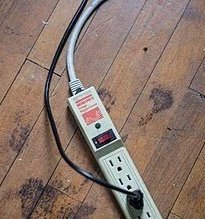
Photo: Wikimedia Commons
Vampire energy, the electricity your appliances consume when they’re not even running, can cause up to 10% of your electricity bill every year. Devices that generate heat are the biggest culprits. Turn off the outlet for your desktop computer, gaming console, toaster oven, and microwave to limit vampire energy consumption.
The biggest vampire energy consumer is your Wi-Fi router. If you’re going away for a long period, or you’re just that unplugged, consider disconnecting the internet.
3) Toaster Oven/Air Fryer
If you’re lucky enough to have the counter space, investing in a countertop toaster oven or air fryer can improve your kitchen’s energy efficiency dramatically. For small and medium portions, toaster ovens can use 50% less energy than an electric oven, while air fryers use 38% less than a gas oven. That's because smaller appliances will heat up more quickly and efficiently. If you’re seeking the most energy-efficient kitchen appliance, CNET argues that a slow cooker will give you the best bang for buck.
4) Community Solar
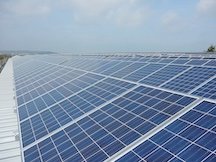
Photo: Wikimedia Commons
It’s a common misconception that in order to get solar energy in an NYC apartment, you would have to install a solar panel on your fire escape or shared rooftop. This is not only false but certainly illegal, but there is a way to use solar energy without owning or even encountering a solar panel yourself.
Community solar projects let renters, homeowners, and business owners subscribe to shared solar panels in their area. Groups like PowerMarket collaborate with ConEd to give you a 10% (or higher) discount on your energy bill, in exchange for signing up for the community solar grid.
I got my household on a community solar project via a quick call with a helpful PowerMarket rep and after filling out a form that took 5 minutes to complete.
5) Draft Stoppers
Do you live in a charming, quaint, old apartment where it feels like half of the heat goes out the window? Well, it probably does. Sealing drafty windows and doors will keep heat inside in the cold months.
Draft tape is easy and temporary. Apply the tape where the window meets the wall, and feel an immediate increase in room temperature.
Under-door stoppers are simple foam pads that slide under doors to limit drafts and keep heat inside the room.
6) Electric Blankets
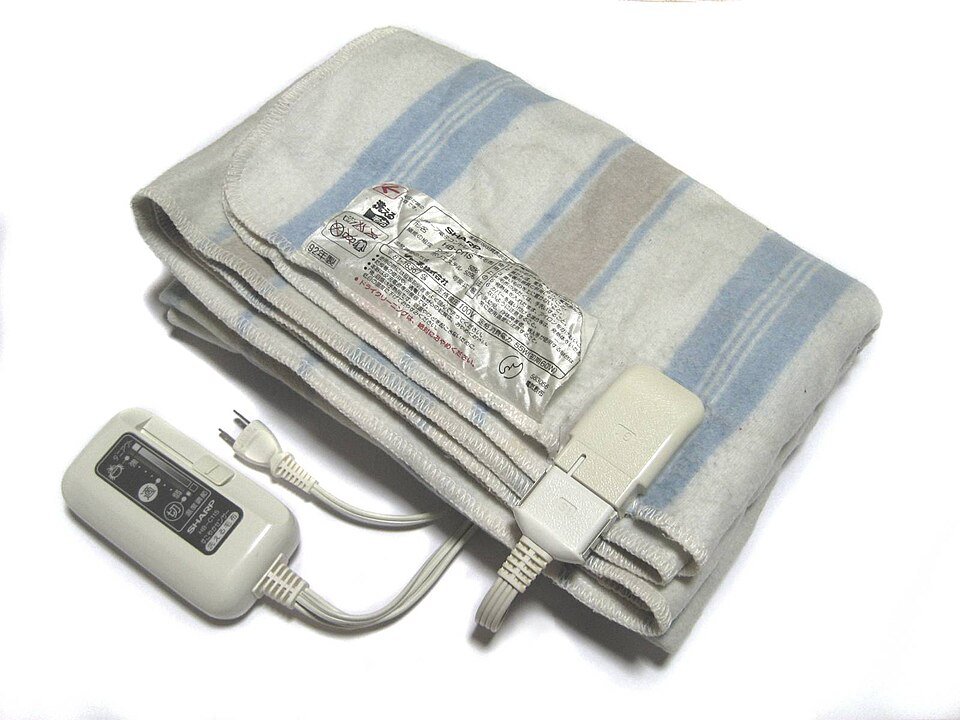
Photo: Wikimedia Commons
Heated throws and mattress toppers are an excellent way to stay warm at night without turning on the central or room heating. They heat up using thin, energy-efficient wires inside of the blanket, using much less electricity than a space heater.
These are just a few ways you can start saving on energy costs, even if you're renting. Did we miss any? Send your recommendations to info@greenhomenyc.org.